RIETI – The program of initiatives and activities in Rieti and its province as part of the “L’Aquila, Italian Capital of Culture 2026” project has officially been launched.
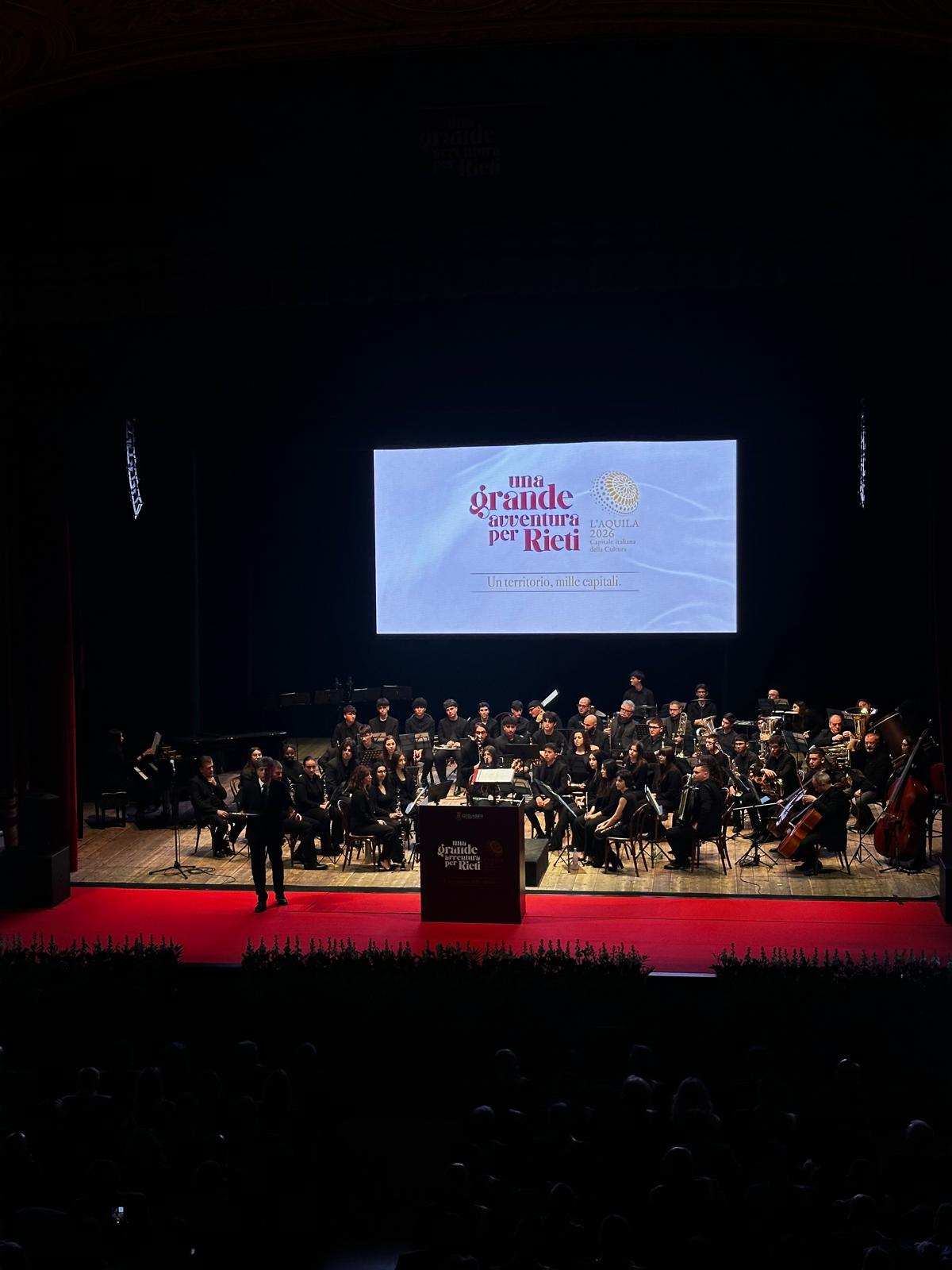
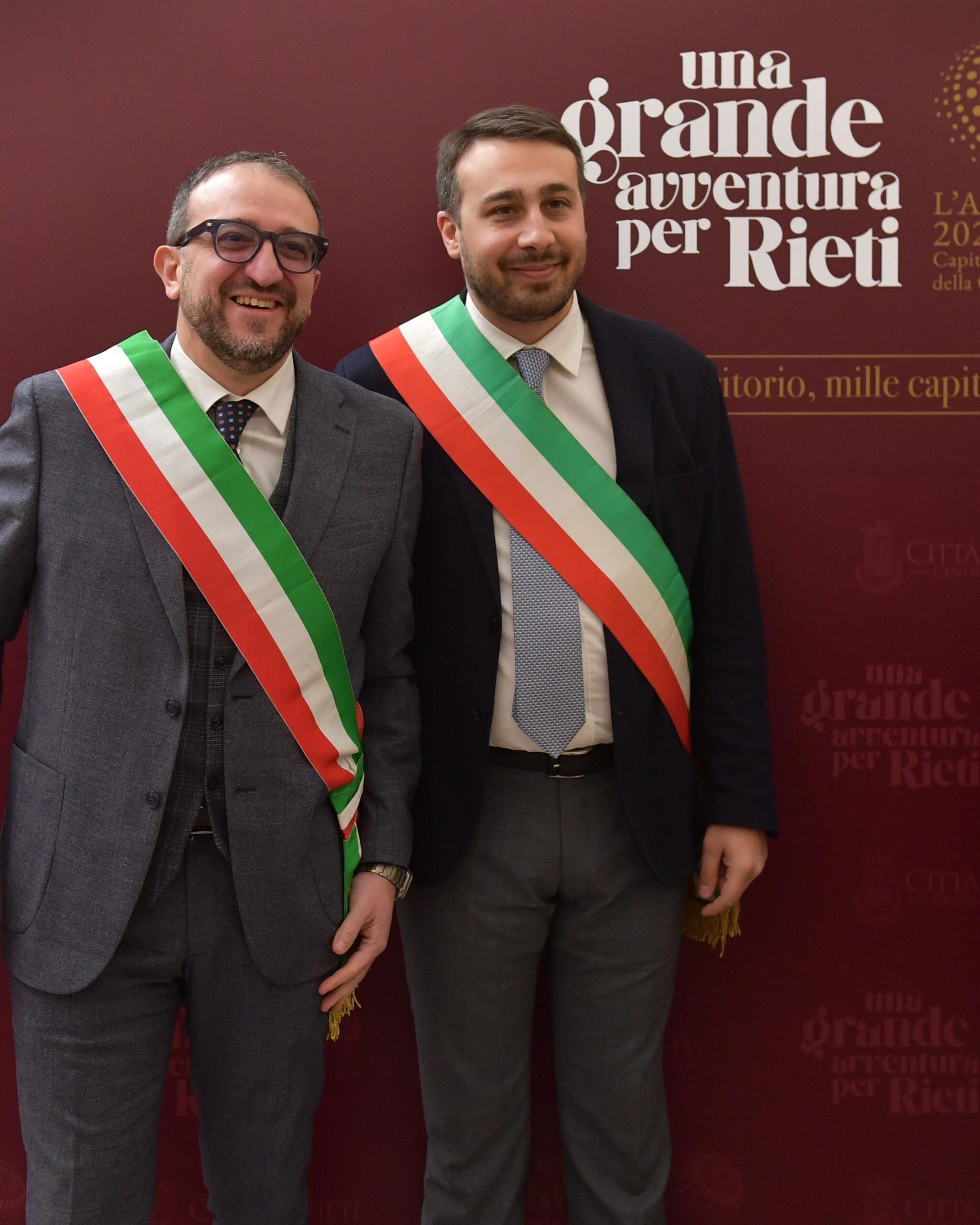
This morning, at the Flavio Vespasiano Theater—recently designated a national monument—the opening event, titled “L’Aquila 2026, a Great Adventure for Rieti,” took place. It began with official remarks by the mayors of Rieti, Daniele Sinibaldi, and of L’Aquila, Pierluigi Biondi, the President of the Province of Rieti, Roberta Cuneo, the Lazio Region’s Councilor for Culture, Simona Baldassarre, the Undersecretary for Culture, Hon. Giammarco Mazzi, and the Secretary-General of the Chamber of Deputies, Hon. Paolo Trancassini.
The event featured the orchestra of the “Elena Principessa di Napoli” Music High School, which provided the musical accompaniment for the ceremony; actor Francesco Pannofino, who led several literary readings related to history and culture; and Juliana Moreira, a well-known television personality. Among the event’s most significant moments was the greeting to the participants by two international students from the Inter-University Center, Elijah Kipuluka and Muhammad Shahryar, who highlighted the natural calling of a city on a human scale—such as Rieti—in the journey of human and academic development.
STATEMENTS
“Our great adventure as the Italian Capital of Culture is to work toward a Rieti capable of overcoming closed-mindedness, delays, and mistrust,” began the Mayor of Rieti, Daniele Sinibaldi “In 2026, thanks to our collaboration with L’Aquila, we want to approach this year by thinking and acting toward a city that is finally open to change, to engagement with the rest of the country and the world, and to the cross-pollination that generates wealth—human, collective, and economic. We want to work to create a city that prioritizes, above all else, a vision for the future—and not merely the legitimate and necessary celebration of the positive experiences of the past. These objectives will be achieved through a process designed to be as widely embraced as possible by the population and capable of being implemented on various fronts: from strengthening cultural infrastructure to supporting the vibrant—yet often fragile—network of associations, and creating the conditions for the emergence and growth of an entrepreneurial ecosystem linked to culture, the performing arts, the visual arts, and creativity. Culture is, in fact, also a vehicle for socioeconomic development and the ability to create added value for the region. Obviously, it will also be an opportunity to reaffirm, at the national level, the central role of the Central Apennines, with L’Aquila leading the way and Rieti playing its part in this existential challenge for our region.”
“Today in Rieti, a shared commitment is taking shape that unites L’Aquila and Rieti in a ‘We’ that is rooted in both memory and responsibility toward the future. A bond that, in a symbolic embrace between the ‘thousand capitals,’ entrusts culture with the task of adding value, fostering dialogue, and giving rise to new perspectives for our regions,” added Pierluigi Biondi, Mayor of L’Aquila. – “This embrace also embodies the pride of communities that are regaining confidence in themselves and choosing no longer to be marginalized, but to take center stage. With this project, we want to demonstrate that inland areas can generate innovation, opportunities, and vision, placing young people and their right to stay at the center.” “Following the inauguration in L’Aquila, this event in Rieti marks the official launch of the year as Italian Capital of Culture: a commitment that, from the Central Apennines, looks toward the nation’s future.”
“The year 2026 will mark the province of Rieti’s entry into a major cultural project rooted in identity, memory, and the deep bond between the territories of the Central Apennines,” explained Roberta Cuneo, President of the Province of Rieti “Together with L’Aquila and Rieti, our municipalities will be the protagonists of a shared narrative that unites history, natural beauty, and community. A cultural bridge capable of transforming the areas affected by the earthquake—and beyond—into places of light and rebirth. A journey built in collaboration with mayors, associations, and local organizations to bring the province’s finest assets to the forefront of the most significant cultural event of 2026.”
“L’Aquila, the 2026 Capital of Culture, is a city that embodies an inland, mountainous region, and this has given rise to a powerful initiative: the Charter of L’Aquila, “The Manifesto of Cities in Inland Areas,” added the Undersecretary for Culture, Hon. Giammarco Mazzi, “Rieti is not a host city but a partner city in this project, united with L’Aquila by deep cultural roots and a history stretching back a thousand years. These are regions that experienced the tragedy of the earthquakes in 2009 and 2016 and are now undergoing a cultural and civic rebirth. This collaboration highlights the importance of joint project development among these regions.”
“This is not a celebratory event, but a strategic one for the future of our regions,” emphasized Simona Baldassarre, Councilor for Culture. “L’Aquila as Capital of Culture is a recognition of extraordinary importance for a city that today presents itself to the nation as a model of rebirth. Our crater area in Lazio is also facing the same challenges as L’Aquila in terms of reconstruction and rebirth. And culture, in this context, is fundamental. Together, L’Aquila and Rieti can showcase the beauty of central Italy.”
“The path taking shape today tells the story of a rebirth that touches the very heart of central Italy. Rieti stands alongside L’Aquila not as a bystander, but as an ally, offering its energy, expertise, and vision,” concluded the Secretary-General of the Chamber of Deputies, Hon. Paolo Trancassini – “It is a choice rooted in community and institutional responsibility, which strongly affirms that inland areas are not peripheral but rather bastions of civilization and the future. Culture thus becomes the thread that unites, strengthens identities, and opens new opportunities for development and cohesion for generations to come.”
The full video of the event is available on the City of Rieti’s YouTube channel at the following link: