
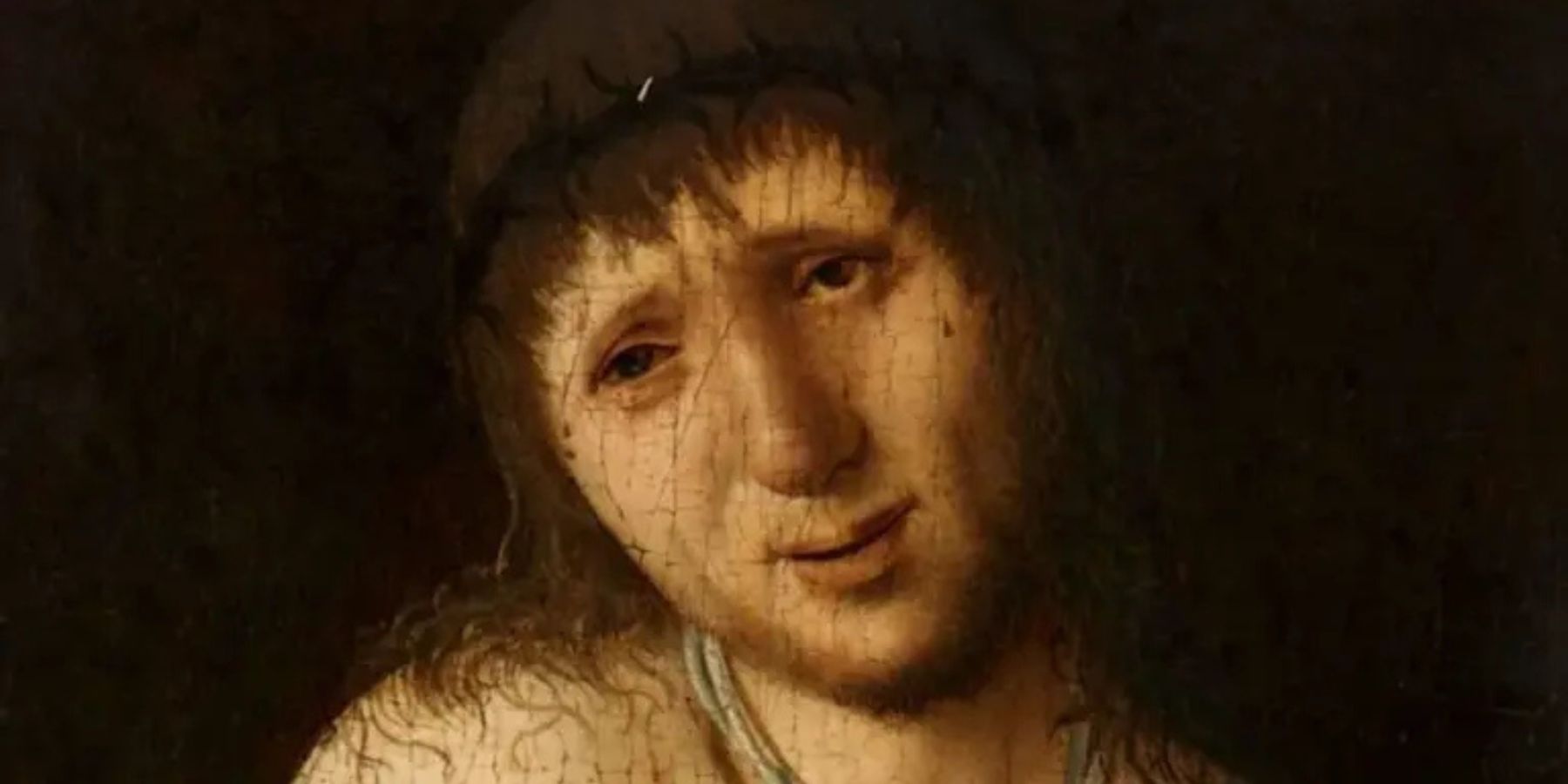
“We welcome with deep pride and sincere gratitude the announcement by Minister of Culture Alessandro Giuli, who, during the Forum in Masseria – Winter Edition in Saturnia, announced that L’Aquila will be the home of Antonello da Messina’s *Ecce Homo* in the year that our city is the Italian Capital of Culture. For L’Aquila and the entire community, this is an extraordinary honor: hosting one of the most celebrated masterpieces of the Italian Renaissance—recently returned to our country thanks to the Italian government’s purchase at a Sotheby’s auction in New York for $14.9 million—represents a recognition of the highest cultural and symbolic value, of international significance. The exhibition of the work at the National Museum of Abruzzo, housed in the 16th-century castle—which has been returned to the city following a major restoration and renovation project—reinforces the Munda’s role as a cultural center of excellence and a tangible symbol of the new era L’Aquila is experiencing. “We thank the minister and the government for a decision that honors the city’s progress and will allow citizens, scholars, and visitors from around the world to experience up close an extraordinary work of art history, helping to make L’Aquila an increasingly important national and international cultural hub.” . This was the comment made by the mayor of L’Aquila, Pierluigi Biondi, in response to the announcement by the Minister of Culture, Alessandro Giuli, during the panel discussion “Culture as a Driver of Development: Promoting Heritage and Economic Growth,” which took place in Saturnia (Gr) as part of the Forum in Masseria – Winter Edition, an event promoted by journalist Bruno Vespa and Comin & Partners, at which Biondi himself was a guest.
“The choice of L’Aquila as the ‘home’ for Antonello da Messina’s *Ecce Homo* in the year that the city is the Italian Capital of Culture,” comments Massimo Osanna, Director General of Museums, “clearly reflects the Ministry’s strategic approach: to promote our cultural heritage by also strengthening those sites of extraordinary value that are currently less integrated into major tourist circuits but have all the potential to become increasingly so.
The assignment of the painting to the National Museum of Abruzzo, housed in the 16th-century castle returned to the city following a complex reconstruction process, takes on a significance that goes beyond the mere exhibition of a masterpiece: it is a sign of trust and rebirth.
From L’Aquila, a tour will begin that will take the work to other major Italian museums, in line with the principles of circulation and accessibility that characterize the National Museum System and ensure that every major acquisition truly becomes a shared cultural heritage.”
“I join the mayor of L’Aquila in thanking the Ministry of Culture, and in particular the Director General of Museums, Prof. Massimo Osanna, for believing in and carrying out the acquisition of *Ecce Homo* and for identifying the Munda, the Munda, the National Museum of Abruzzo in L’Aquila, as its potential home,”said Federica Zalabra.