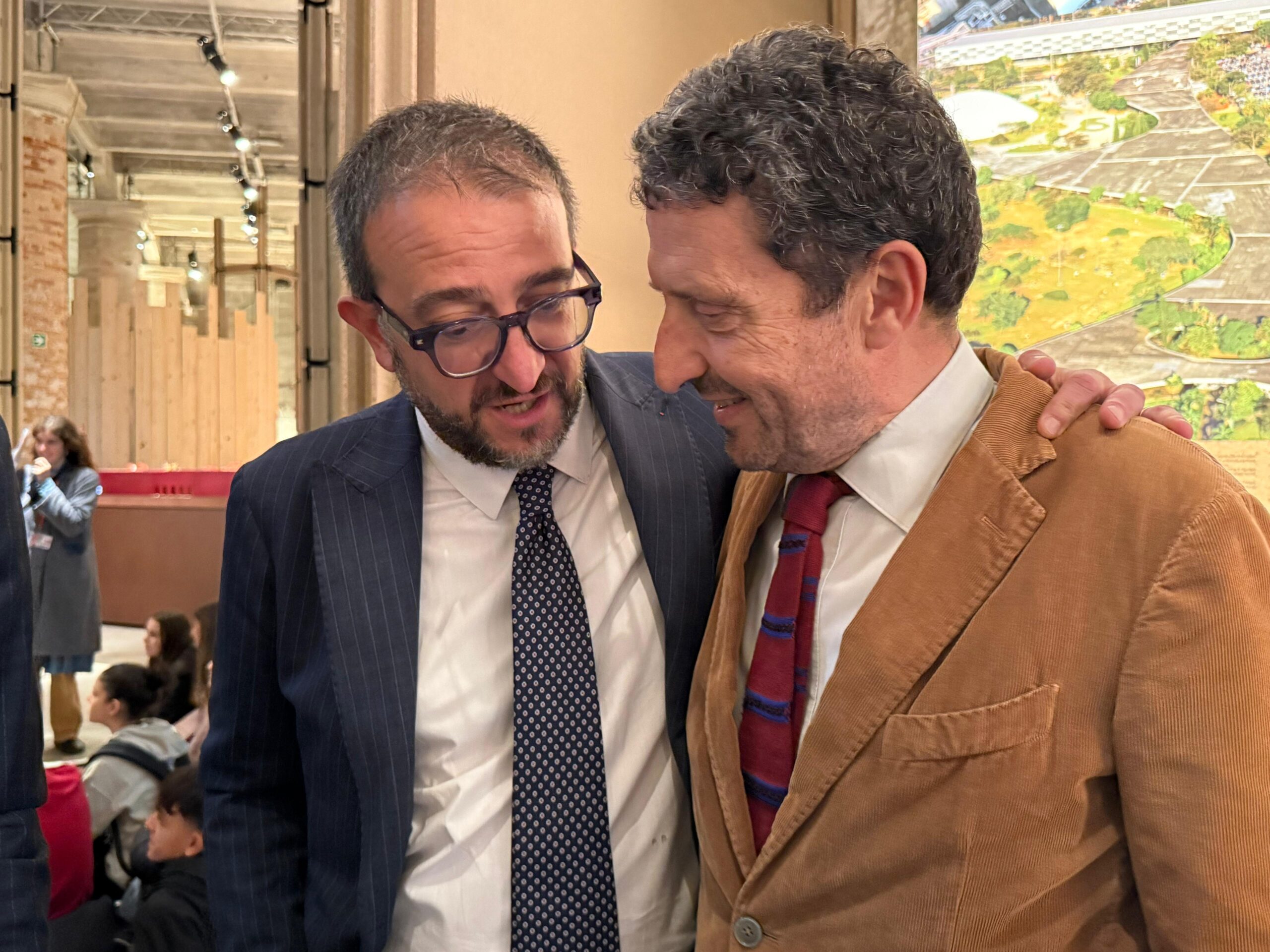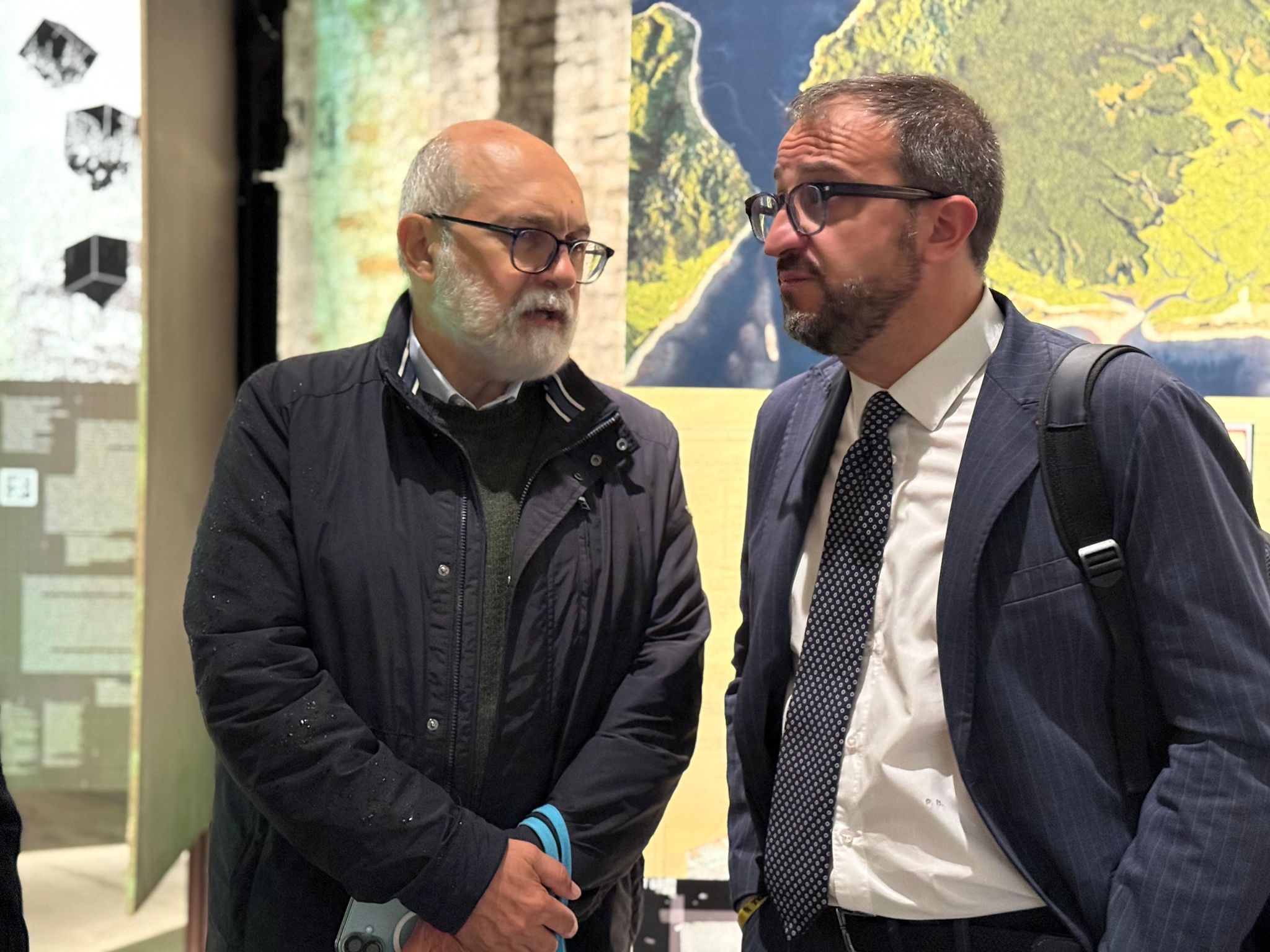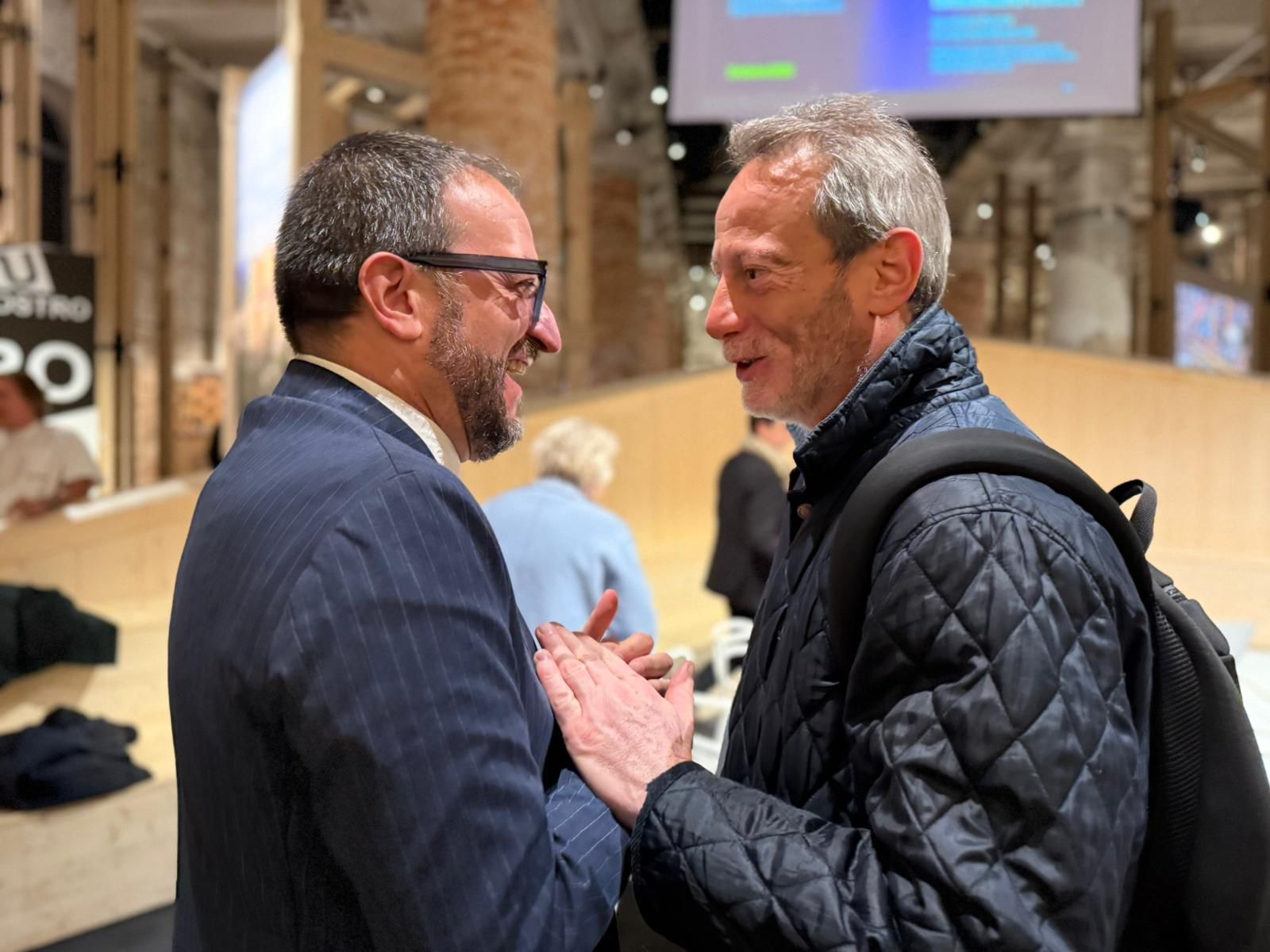
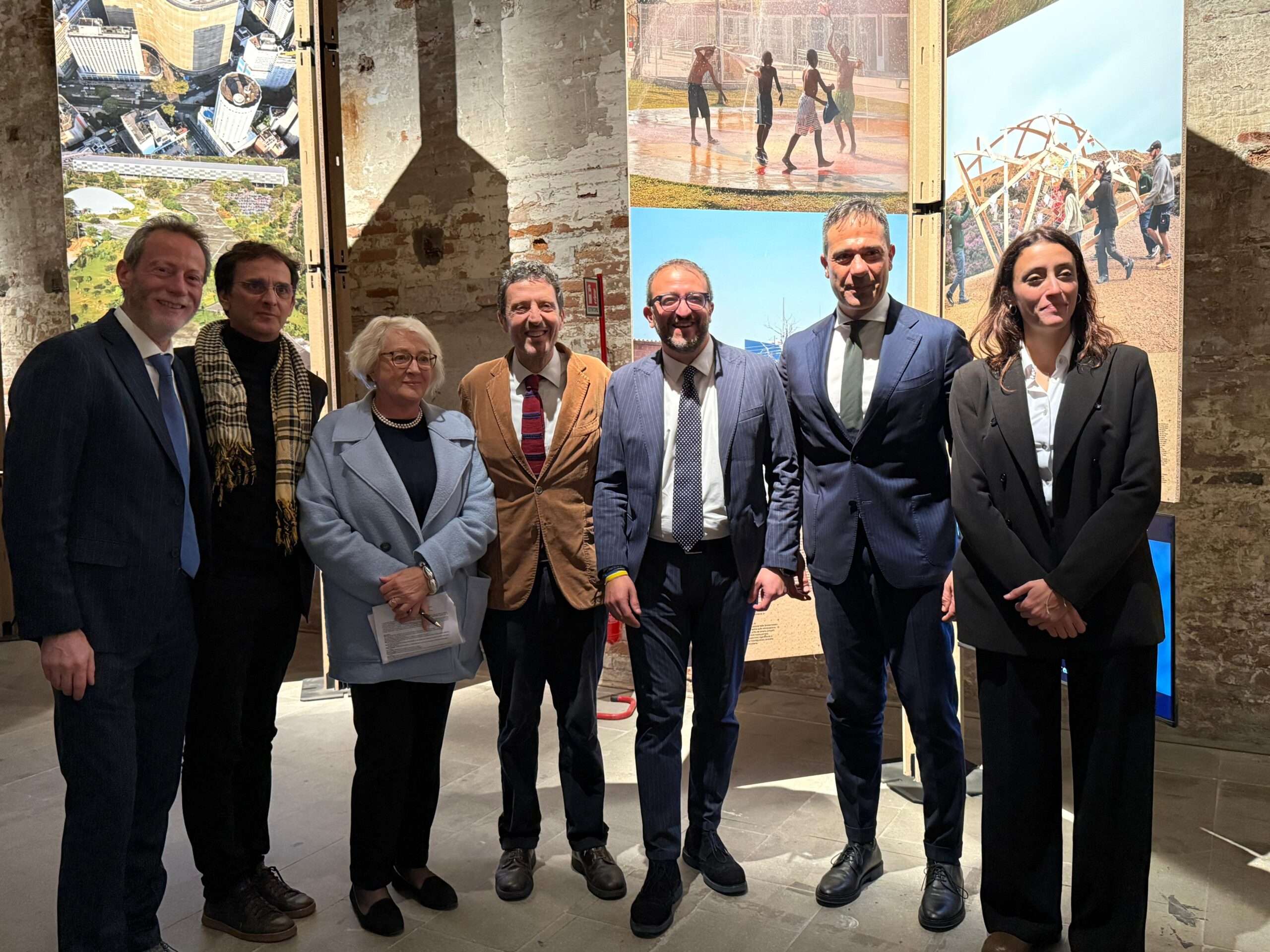
The city of L’Aquila, the 2026 Italian Capital of Culture, took center stage at the 2025 Venice Architecture Biennale with Mayor Pierluigi Biondi’s participation in the event “Intelli_Gens Demopratica – Meeting of the Coordinators of Demopratic Projects,” promoted by Cittadellarte – Fondazione Pistoletto.
An event of international significance that brought together administrators, artists, and representatives of institutions from around the world to share experiences and practices related to so-called “democratic works”—projects that combine art, citizenship, and social responsibility—already underway in cities such as Geneva, Gorizia, Seoul, Havana, Rome, Busto Arsizio, Scanno, Ivrea, and Biella-Città Arcipelago.
Speakers included Pierluigi Biondi, mayor of L’Aquila; Giuliana Setari, president of the Pistoletto – Cittadellarte Foundation; Carlo Ratti, curator of the 2025 Architecture Biennale; Sara Gentile, deputy mayor of Biella; Emanuele Ramella Pralungo, president of the Province of Biella; Giovanni Mastrogiovanni, mayor of Scanno; and Paolo Naldini, director of Cittadellarte.
During the meeting, Pietrangelo Buttafuoco, president of the Venice Biennale Foundation—and a friend of L’Aquila, former president of the Teatro Stabile d’Abruzzo — extended a special greeting to the city and to Mayor Biondi, recognizing the capital of Abruzzo as a place of thoughtful citizens and communities where awareness and political intelligence are driving its rebirth.
“In L’Aquila, ‘demopraxia’ took concrete form in the post-earthquake reconstruction,” said Mayor Biondi. “It was a long and complex process, made possible by constant dialogue among institutions, citizens, artists, businesses, and universities: a true collective effort at regeneration. Today, as we pursue the title of Italian Capital of Culture 2026, that experience becomes a shared narrative and a platform for the future.”
The event, inspired by the principles of Michelangelo Pistoletto’s “Third Paradise,” explored the role of art as a collective practice that unites civic-mindedness and social responsibility.
Also present to represent the vision and strategy behind L’Aquila’s bid was Pier Luigi Sacco, the project’s scientific coordinator, who emphasized that “culture, understood as an ecosystem of innovation and participation, is today a driving force for democratic renewal and sustainable development.”
Demopraxia, a key concept developed by Michelangelo Pistoletto, has been described as “an example to be understood, followed, and learned from,” based on individual responsibility and the awareness that peace and civil progress are built together, step by step.
“There is a deep connection between the community of L’Aquila and the work of Pistoletto, the theorist behind the Third Paradise,” added Biondi. “One of his works is located in front of the Parco Auditorium, designed by Renzo Piano, a symbol of rebirth.”
“His manifesto teaches us that between nature and artifice there is a third space: that of responsibility. That is where L’Aquila fits in, viewing culture not as the pursuit of a particular field, but as a vital system—a fabric that holds together the economy, identity, and participation.”
The day unfolded as a forum for reflection and vision on the future of democratic practices and civic culture, at the heart of the Biennale—the quintessential venue for dialogue between the arts and ideas.
“It was a day of study and discussion, during which we took the risk of talking about what we’re doing,” Biondi concluded. “To understand how to renew and revitalize democracy, restoring its meaning, practices, and vision. The “Italian Capital of Culture” dossier takes shape precisely in this way: through vibrant artistic processes capable of placing our region at the heart of the highest expressions of contemporary art.”