
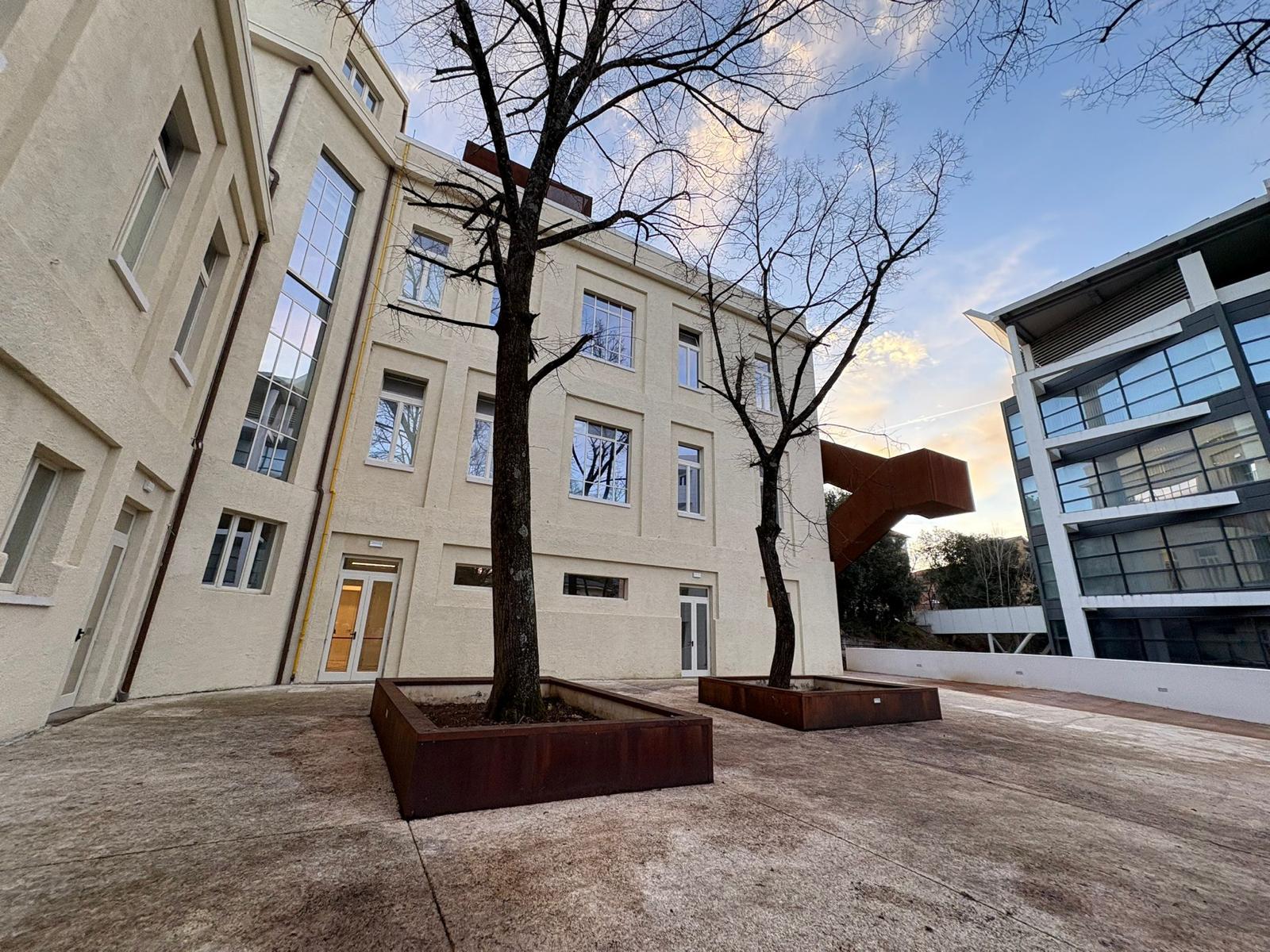
“Architecture and Urban Planning in Abruzzo, 1930–1960” will be one of the major exhibitions featured in the program for L’Aquila, Italian Capital of Culture 2026. The exhibition, organized in collaboration with MAXXI L’Aquila and curated by Mario Centofanti, Raffaele Giannantonio, and Andrea Mantovano, will open in June 2026 at Palazzo ONMI (the former daycare center on Viale Duca degli Abruzzi) and will remain open to the public through December.
The exhibition will offer a broad overview of the period of design and construction that accompanied the modernization of Abruzzo from the 1930s through the post-World War II era, exploring the interplay between architecture, landscape, and society.
Drawings, vintage photographs, video footage, and documents from public and private archives will illustrate how the transformation of the region has been intertwined with major Italian and European architectural movements.
The project will be enriched by a series of events organized in collaboration with the University of L’Aquila, the “G. d’Annunzio” University of Chieti-Pescara, the Order of Architects, and other local cultural institutions.
A journey of research and outreach aimed at fostering dialogue between academia, the professional world, and the general public, and contributing to the building of the L’Aquila of the future through the memory of its spaces.
The initiative is part of a broader collaboration between the City of L’Aquila and the city’s museums.
“MAXXI L’Aquila, with its commitment to contemporary art and innovation, is a strategic partner in promoting our cultural identity, weaving together the memory of the reconstruction with a vision for the future,” said Pierluigi Biondi, mayor of L’Aquila.
In recent days, two other major projects included in the 2026 program have already been announced: the National Arts Award—20th edition, organized by the Academy of Fine Arts of L’Aquila in collaboration with the MUR, and the Academies Event, a major exhibition dedicated to contemporary sculpture that will bring together six prestigious Italian academies.
“All of these initiatives,” Biondi continued, “together with the exhibition organized in collaboration with MAXXI L’Aquila, help to build the mosaic of L’Aquila, Italian Capital of Culture 2026, confirming that the project is a faithful expression of our identity: a unique and united region woven into a tapestry where a thousand stories—of people and places—are told and become our shared heritage.”