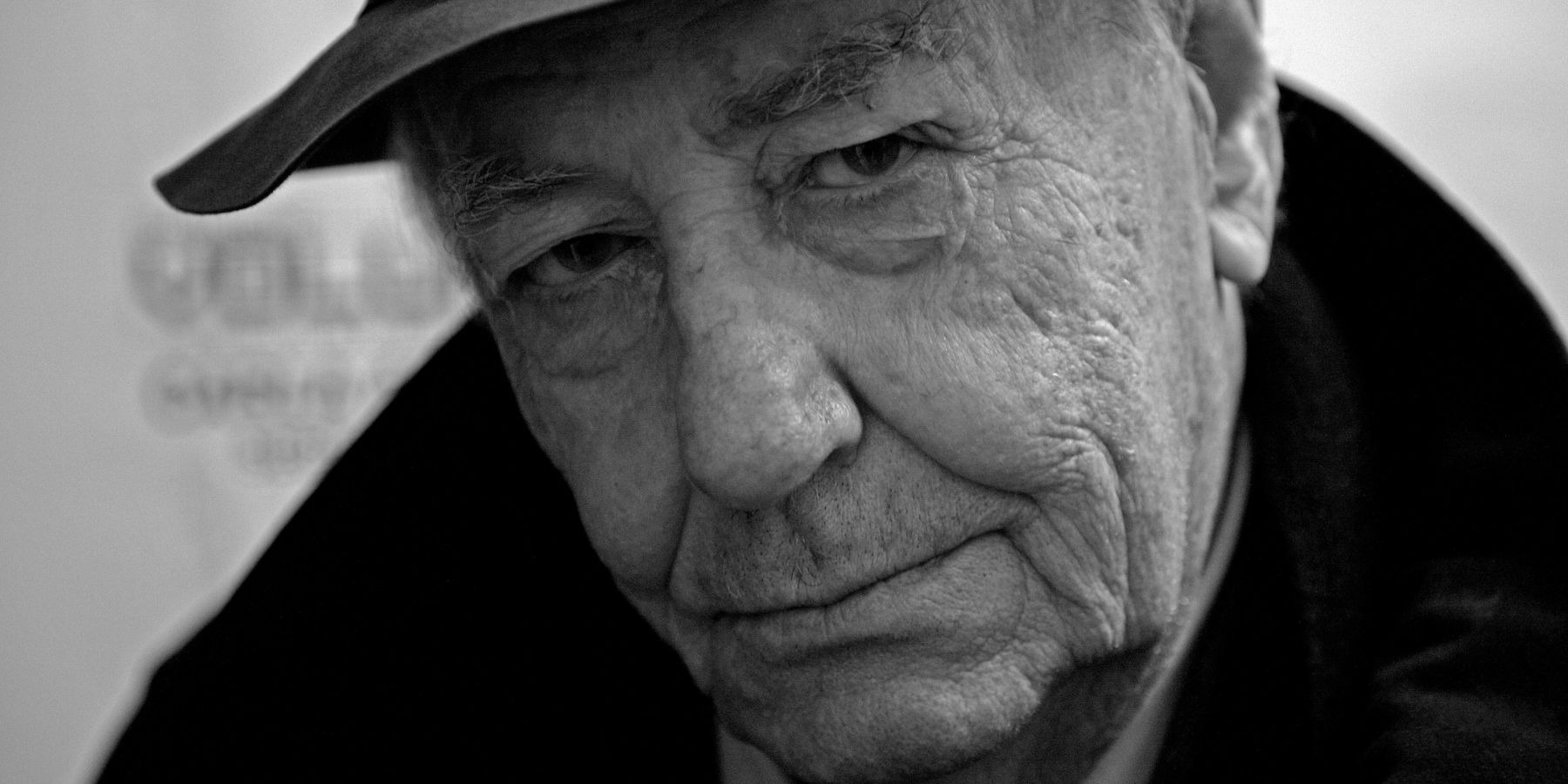
On the 100th anniversary of Fabio Mauri’s birth, the City of L’Aquila and MAXXI present the most anticipated exhibition of fall 2026: “Fabio Mauri. The L’Aquila Years,” curated by Maurizio Cattelan and Marta Papini. From September 26, 2026, to January 24, 2027, at MAXXI L’Aquila, in Palazzo Ardinghelli, an exhibition featuring works, performances, and images that retraces the two decades spent in L’Aquila by one of the most radical and influential artists of 20th-century Italian art.
One hundred years since his birth. Twenty years spent in L’Aquila. An exhibition curated by Maurizio Cattelan and Marta Papini. These three elements alone would be enough to make “Fabio Mauri: The Years in L’Aquila” one of the most anticipated exhibitions in Italy in 2026.
The Municipality of L’Aquila and the MAXXI are presenting the exhibition as part of the program of theAquila, Italian Capital of Culture 2026: from the September 26, 2026, through January 24, 2027, the spaces of Ardinghelli Palace headquarters of the MAXXI L’Aquila, are hosting the exhibition project dedicated to Fabio Mauri (Rome, 1926–2009) — an artist, writer, and intellectual who was among the most radical and influential figures in Italian art of the second half of the 20th century — edited by Maurizio Cattelan and Marta Papini.
“With this exhibition, L’Aquila is paying tribute to Fabio Mauri, who has contributed so much to the city as an artist, intellectual, and educator,”, says the mayor of L’Aquila, Pierluigi Biondi. “Thanks to Maurizio Cattelan and Marta Papini, we are celebrating his artistic work and the role he played in shaping generations of students and the city itself.”
Fabio Mauri and L’Aquila: Twenty Years of Teaching and Research
The connection between Fabio Mauri and L’Aquila is not merely a biographical coincidence: it is the heart of the exhibition and the reason why L’Aquila is the most fitting place to celebrate his centennial.
From 1979 to 1999, Mauri taught Aesthetics of Experimentation at theAcademy of Fine Arts in L’Aquila: over the course of twenty years, he forged a deep connection with the region, the students, and the city, training generations of artists and bringing to the capital of Abruzzo one of the most authoritative and essential voices in the Italian cultural debate. The exhibition traces this twenty-year period through a selection of works created during his time in L’Aquila, capturing their critical power.
“At MAXXI L’Aquila, we enthusiastically embraced the curators’ idea to celebrate Fabio Mauri on the centennial of his birth—and to do so in the very city that played an active role in his creative journey,”, says Maria Emanuela Bruni, President of the MAXXI Foundation. “Once again, the museum serves as a place capable of promoting a profound reinterpretation of the past in light of the present.”
The Exhibition Project: Images, Ideology, Memory
Fabio Mauri’s work revolves around a specific theoretical axis: the relationship between image, ideology, and historical memory, and the mechanisms through which representations influence individual and collective consciousness. This body of thought has been systematically developed and today—in a present marked by conflicts and ideological tensions—retains a civil and political urgency .
The exhibition layout within Palazzo Ardinghelli does not follow a chronological or philological order: the works are arranged as a sequence of images that settle in the visitor’s mind through visual associations, resonances, and contrasts. It is a journey that places the viewer in an uncomfortable position—both a witness and an accomplice to the horrors and the forgotten chapters of history.
The centerpiece of the exhibition is *I Am an Arian*, Fabio Mauri’s final published work, released in the year of his death. Composed almost entirely of images—“a chain of ideas born as a succession of others”—the volume takes the form of a visual diary in which the artist asserts that he genuinely experienced life. The book’s inclusion in its entirety in the exhibition extends the experience beyond the artworks: it is Fabio Mauri’s very life that enters the exhibition space.
“Fabio Mauri has explored the relationship between symbols, narratives, and visual devices with extraordinary clarity,”, say the curators Maurizio Cattelan and Marta Papini. “With this exhibition, we want to bring that discourse back into the present, starting with the decisive role that images play in his work and, in particular, in *I Am an Arian*, where they become a form of thought, testimony, and responsibility of the gaze.”
The Works and Performances
Alongside the sculptures and installations—including Muro d’Europa / La barca (1979), Entartete Kunst (1985), and the series Arierwiege (1995), La Resa (2002)—the exhibition presents two emblematic performances that are rarely staged again:
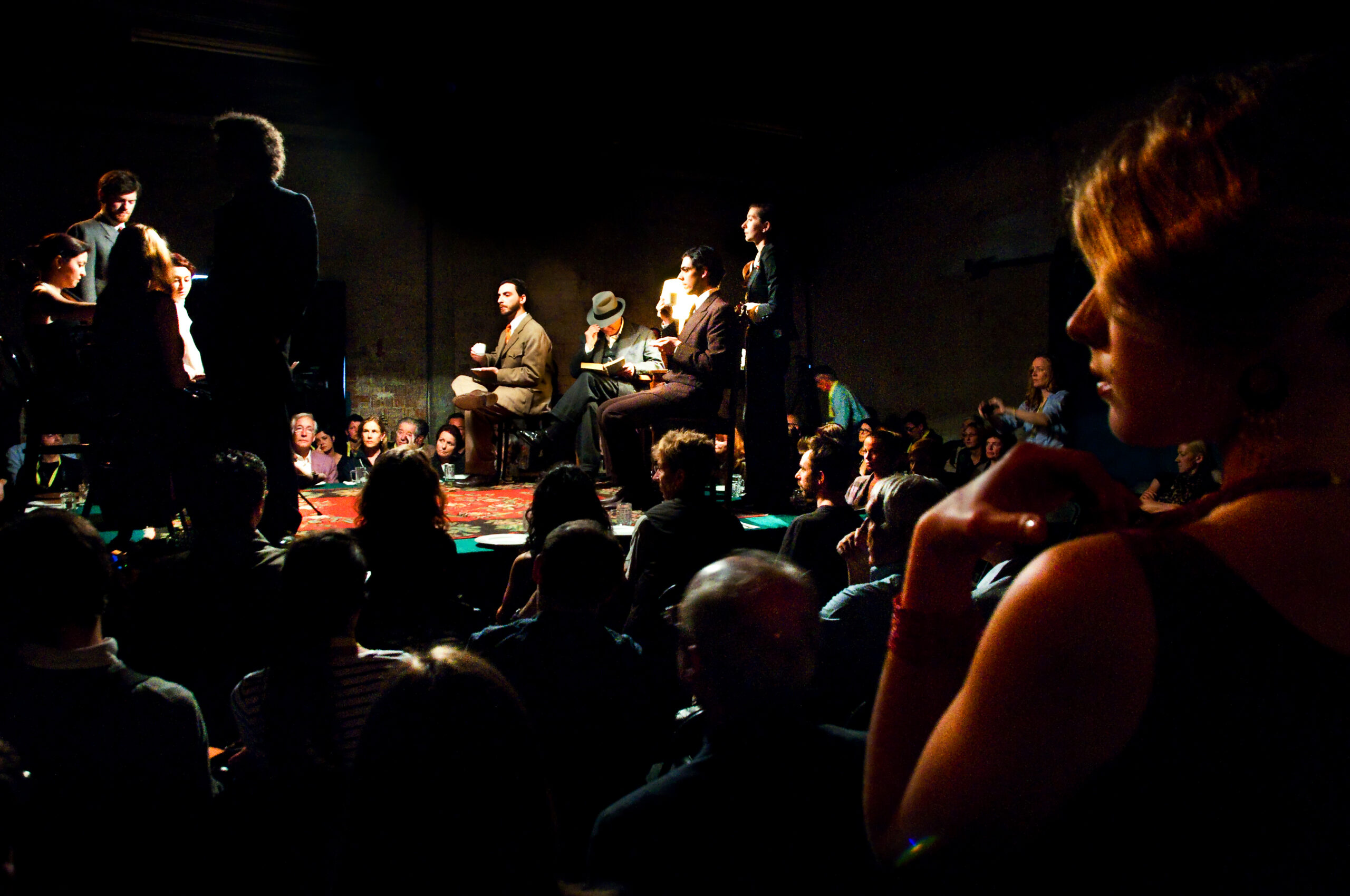
What Is Philosophy? Heidegger and the German Question. Table Concert (1989): last presented in 2012 at dOCUMENTA (13) — one of the world’s most important contemporary art exhibitions — it returns to L’Aquila for the first time in over three decades.
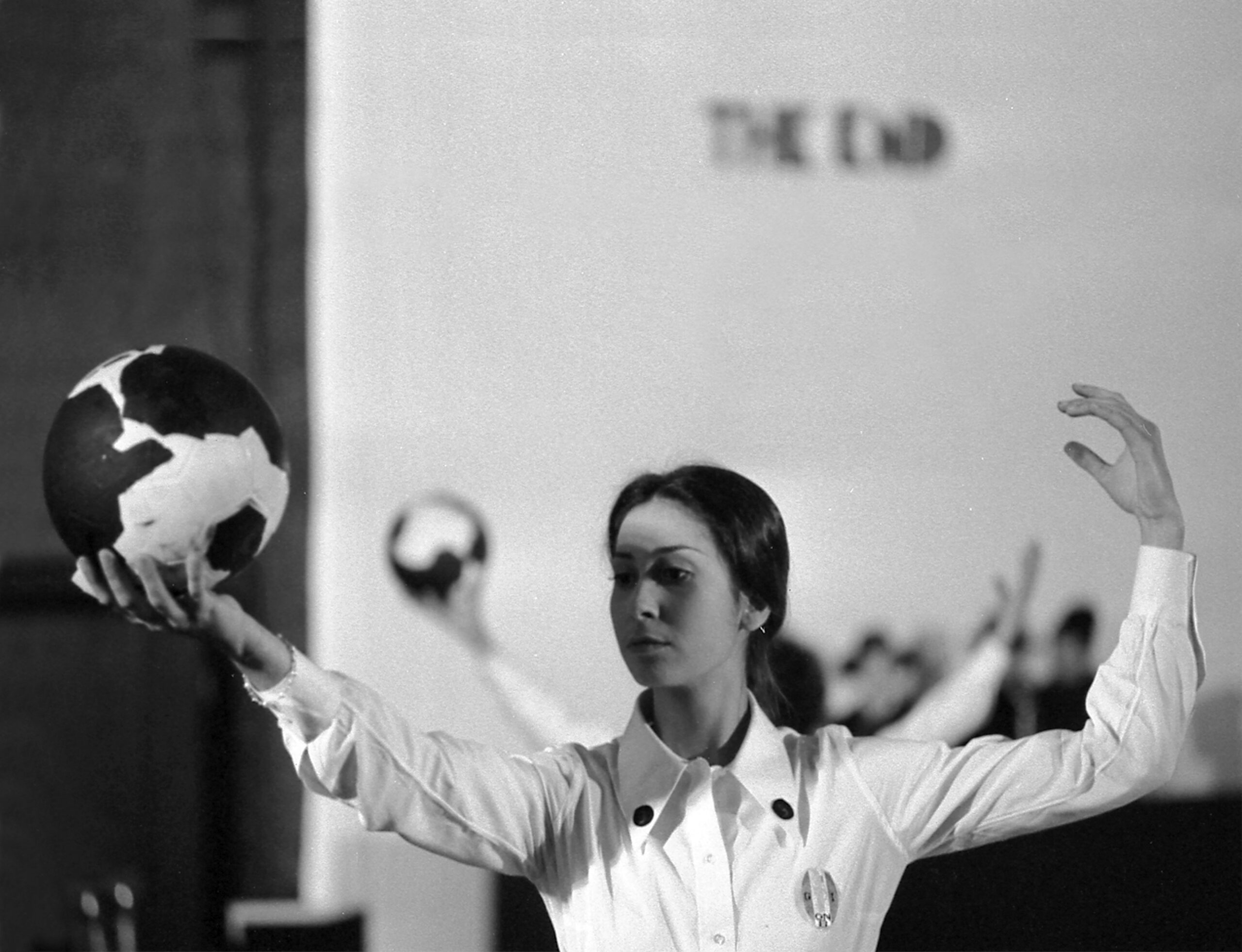
What Is Fascism? A Celebration in Honor of General Ernst von Hussel, Who Was Passing Through Rome (1971): revived after nearly thirty years in collaboration with the Academy of Fine Arts in L’Aquila. One of the most radical actions in the history of Italian performance art, which L’Aquila has the privilege of hosting.
The themes that run through the exhibition—Europe’s ambiguous position as a place “no more an idyll than a place of extermination, perfectly suited to both”; the relationship between art and politics; the memory of the atrocities of war; the atonement for individual and collective guilt; the persuasive allure of ideology—are themes of the twentieth century that the present has not yet fully come to terms with.
An exhibition presented by the City of L’Aquila and MAXXI, as part of the program for L’Aquila, Italian Capital of Culture 2026.